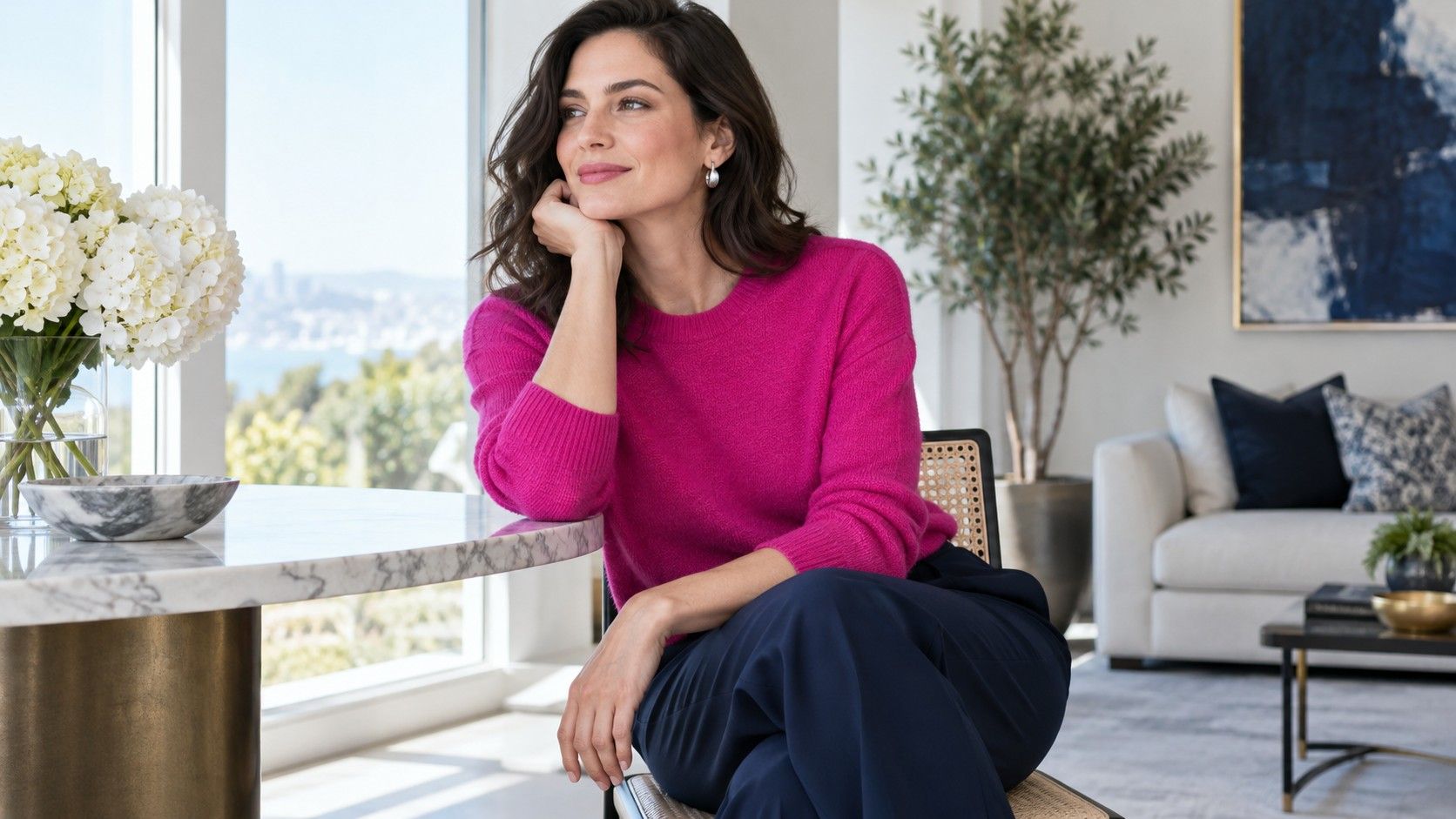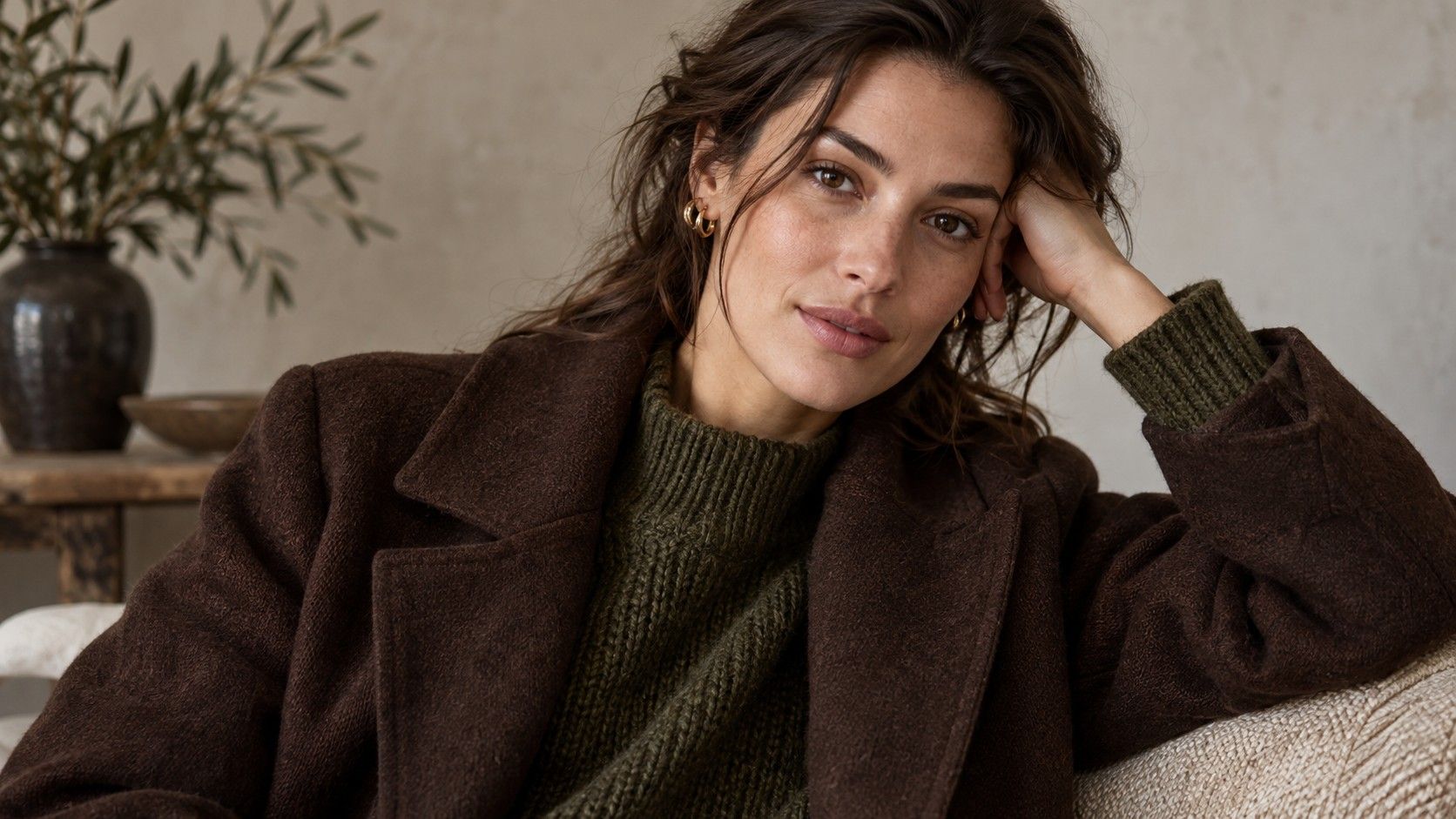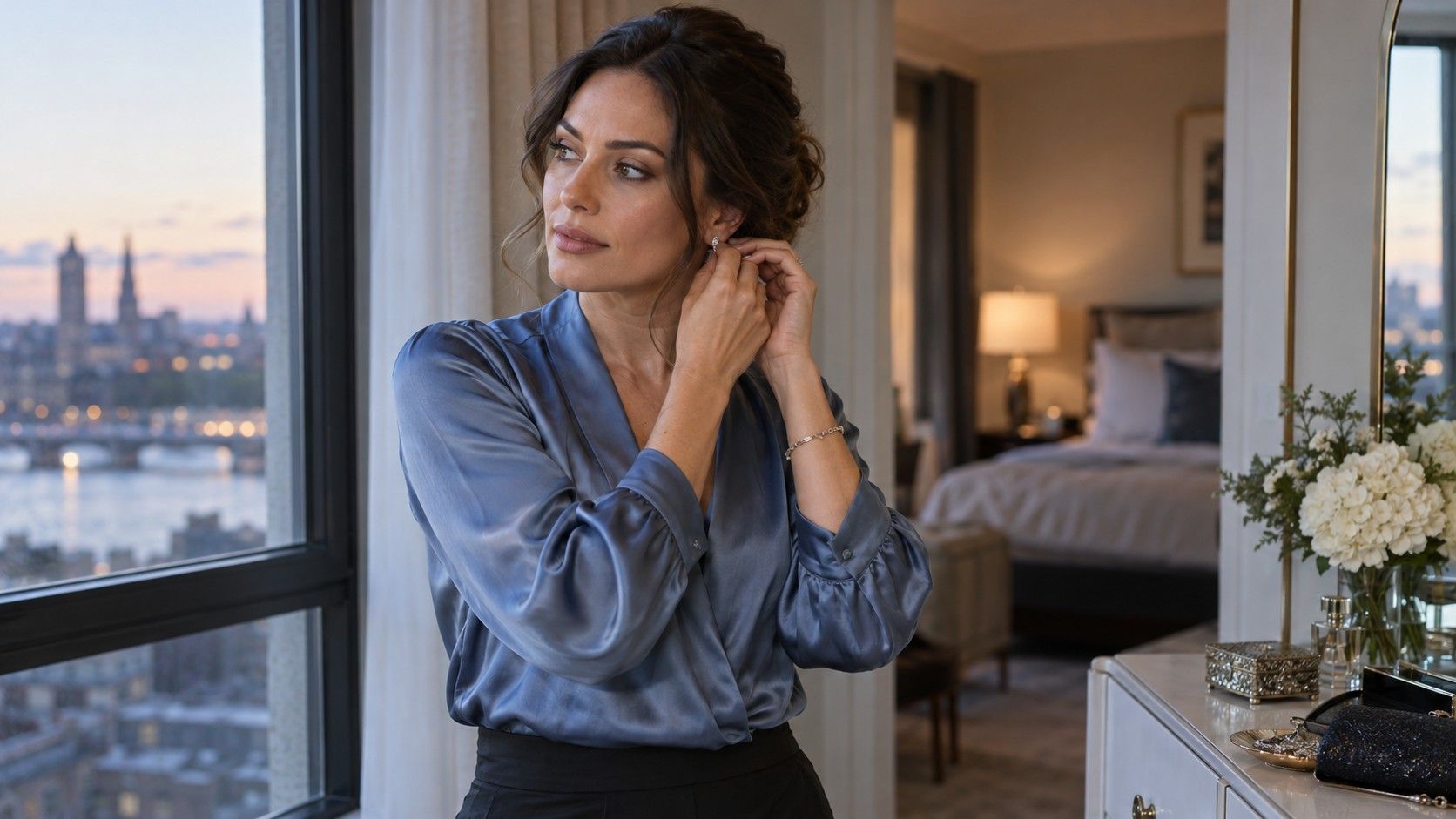
A black outfit is an easy answer to an evening invitation, but it is not the only useful one. Navy tailoring, a muted plum dress or a blue-grey blouse can feel dressed up through fabric, fit and styling. If you are exploring Cool Summer evening colors, begin by deciding how much contrast and shine you enjoy. Then compare the clothes in lighting close to the place you will wear them.
Test the color relationship before choosing something darker
Cool Summer color analysis usually points toward cool-leaning colors with a degree of softness, though seasonal systems differ in their names and boundaries. Some providers use Cool Summer and True Summer in similar ways; others make distinctions. Check the system behind your palette before assuming every chart describes the same thing. A garment also needs to work as a garment, regardless of how closely its product photograph resembles a swatch.
For an evening outfit, darkness and formality are separate choices. A medium blue-grey satin blouse can feel more formal than a dark navy cotton tee. Muted plum in a well-cut jacket may serve the same event as a black blazer. Read the invitation or venue guidance first: a dinner with friends, a formal wedding and a black-tie event have different expectations. A seasonal palette does not replace a dress code.
To explore coolness, compare two similar garments at the neckline: perhaps a blue-based rose and a warmer peach, or cool navy and a warmer brown. Keep value and finish as similar as you reasonably can. Use indirect daylight for the first comparison, then look under indoor lighting. Ask which relationship you prefer with your face, hair and the rest of your clothing; avoid turning a preference into a claim that one shade is objectively correct.
Compare navy, plum and blue-grey with your real accessories
These three color families can offer different kinds of evening depth. Navy may provide a familiar alternative to black. Plum brings visible color while staying relatively dark, and blue-grey can create a lighter overall outfit. The names alone are unreliable: plum might mean subdued violet or vivid red-purple, and navy can lean green or almost black. Inspect the actual fabric whenever possible.
Choose one anchor garment and test it with the shoes, bag and outer layer you intend to use. A navy dress may work with your black shoes and grey wrap; a blue-grey trouser suit may need no new accessories at all. Put the outfit on and move around. A collar that shifts, an uncomfortable waistband or a shoe you cannot stand in will matter more over an evening than a small discrepancy from a palette.
| Color direction | Evening combination to test | What to inspect |
|---|---|---|
| Deep navy | Navy dress or separates with a grey wrap | Whether the navy and accessories seem deliberately coordinated |
| Muted plum | Plum top with charcoal trousers | Enough value difference to distinguish the pieces |
| Blue-grey | Blue-grey tailoring with a pale cool blouse | The effect of the light layer at the neckline |
| Soft berry | Berry blouse with a navy skirt | How much color and surface shine you enjoy together |
If two dark pieces almost match, view them under more than one light source. A navy jacket and navy trousers bought separately may look like an intended suit indoors and noticeably different outside. Use matching fabric when you want a suit, or choose a clear distinction in shade or texture when you want separates. That decision makes more difference than finding two items with the same retailer's color name.
Let fabric supply the evening interest
A Cool Summer color palette can feel understated on a screen, but clothing has surface and movement. Satin reflects light, velvet changes appearance as its pile moves, and a fine sheer layer creates depth over a lining. Any of these can add interest to a restrained color. Try one noticeable texture first, especially if you also want jewelry or a patterned accessory to have a clear role.
Check shine from several angles. A satin top may show bright highlights under a restaurant lamp and look much more subdued in daylight. Velvet may appear almost black in its folds, even when the base color is blue or plum. Take a step back from the mirror and move your shoulders. The overall impression during movement is more relevant to an evening event than a single close-up of a fabric swatch.
Contrast does not have to come from black and white. A pale grey camisole under a navy jacket creates a light-dark frame; a medium plum dress with a darker belt creates a smaller distinction. Alternatively, keep the outfit close in value and let a defined neckline or textured fabric provide structure. Low contrast is an option, not a compulsory feature of every Summer outfit. Use it when you like the result and the pieces still read clearly.
Coordinate makeup and jewelry without matching every shade
If you wear makeup, use the outfit as context rather than a paint chart. A muted rose lip with a plum blouse need not reproduce the blouse exactly. You might prefer a quieter lip with a glossy top, or a stronger berry lip with plain navy tailoring. Try the combination while wearing the garment because the amount and placement of color matter. Preferences about makeup coverage and intensity remain personal.
Keep the first trial controlled. Change one lip color while leaving the rest of your makeup and the outfit steady, then inspect it in daylight and indoor light. A camera may exaggerate or mute the result through automatic processing, so use photographs as reminders. There is no need to purchase a complete set of products for a seasonal label, particularly when your existing products already create an effect you enjoy.
Silver-toned jewelry is often suggested with cool palettes, but metal choice can be broader than a simple warm-versus-cool rule. Brushed and highly polished finishes create different impressions, and a small gold pendant has a different visual role from a large bright necklace. Compare the jewelry you own at the intended neckline. Comfort, sentimental value and the shape of the piece are valid reasons to choose it.
Adapt the black evening outfit already in your wardrobe
A Cool Summer palette does not require giving up black. If you enjoy a black dress, wear it. When you want a different relationship at the neckline, add a blue-grey wrap, a muted rose scarf or a visible cool-colored underlayer that suits the garment. Changing how much black sits near your face may produce the effect you want without replacing the main piece.
You can also change contrast through accessories. Black shoes and a black bag may keep the outfit visually connected, while a grey bag or plum layer introduces a softer step between colors. There is no requirement to match shoes and bag precisely. Check the whole outfit from across the room and decide whether the accents look intentional to you. Very small differences that are obvious on the bed may disappear when the garments are worn.
Use existing pieces for a rehearsal before ordering alternatives. Try the outfit with the coat you will arrive in and the underlayers you need. Sit down, raise your arms and walk in the shoes. An evening look includes the practical journey to the event, and a warm layer that fits properly is more useful than an ideal swatch that never leaves the wardrobe.
Make the final decision under realistic lighting
Try the complete outfit a few days before the occasion so there is time for a simple adjustment. Daylight reveals one set of relationships; warm indoor lamps or colored event lighting may reveal another. You cannot control every venue, and there is no need to optimize for every possible bulb. Check for obvious surprises such as two nearly matching dark fabrics separating or a shiny blouse appearing brighter than expected.
Keep hair changes separate from solving one evening outfit. Searches for the best hair color for a Cool Summer palette can suggest a universal answer where individual preferences, maintenance and the starting color matter. You do not need to change your hair to make navy, plum or blue-grey wearable. Judge the outfit with your current hair and use a neckline or accessory adjustment if you want a different balance.
After the occasion, remember the practical result: whether you felt comfortable, whether the layer stayed in place and which color you would happily wear again. A successful evening wardrobe often grows from repeating one reliable combination in a different texture or silhouette. Seasonal color language can help you explore those choices, while the clothes you enjoy wearing provide the more useful evidence.