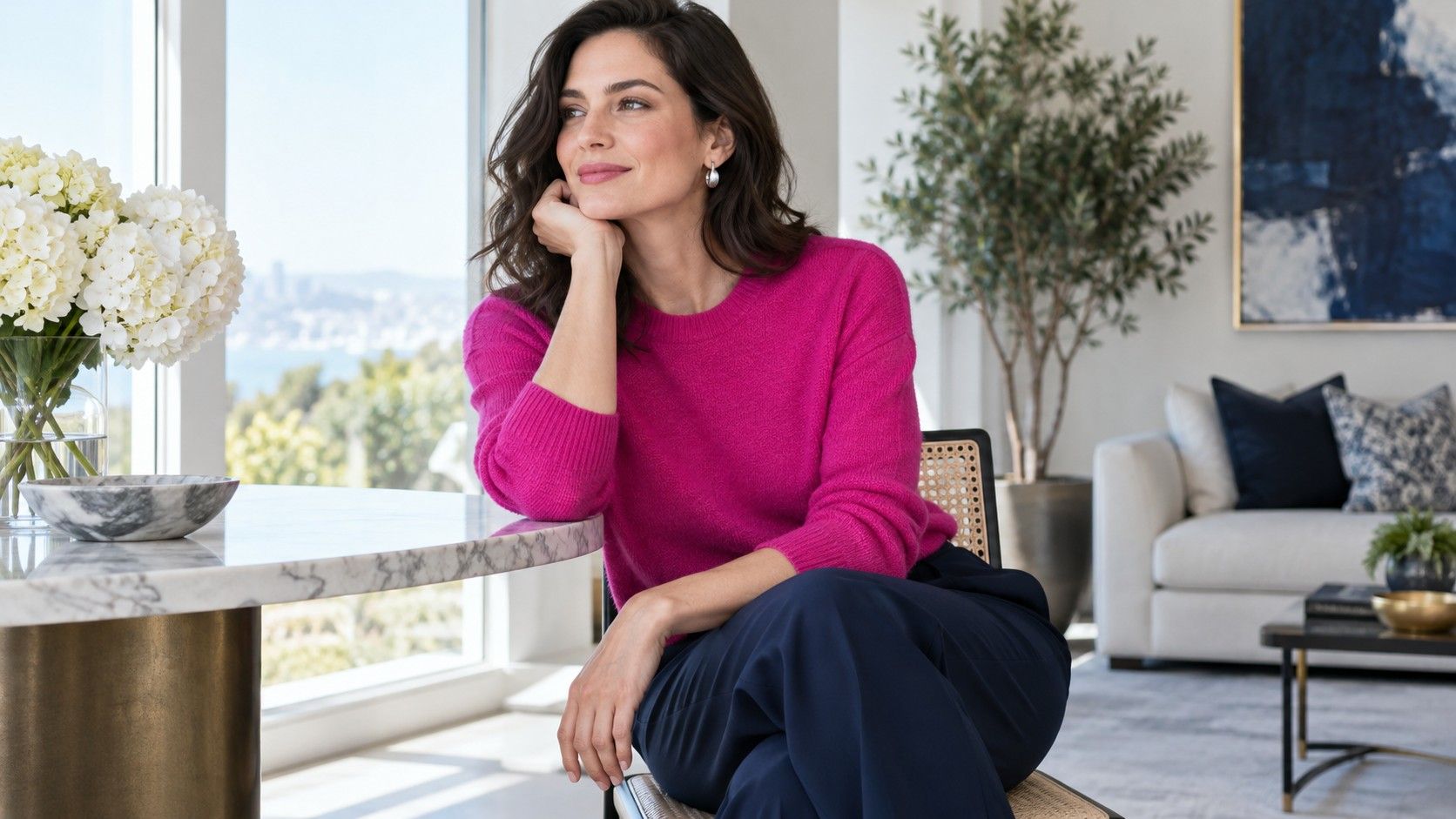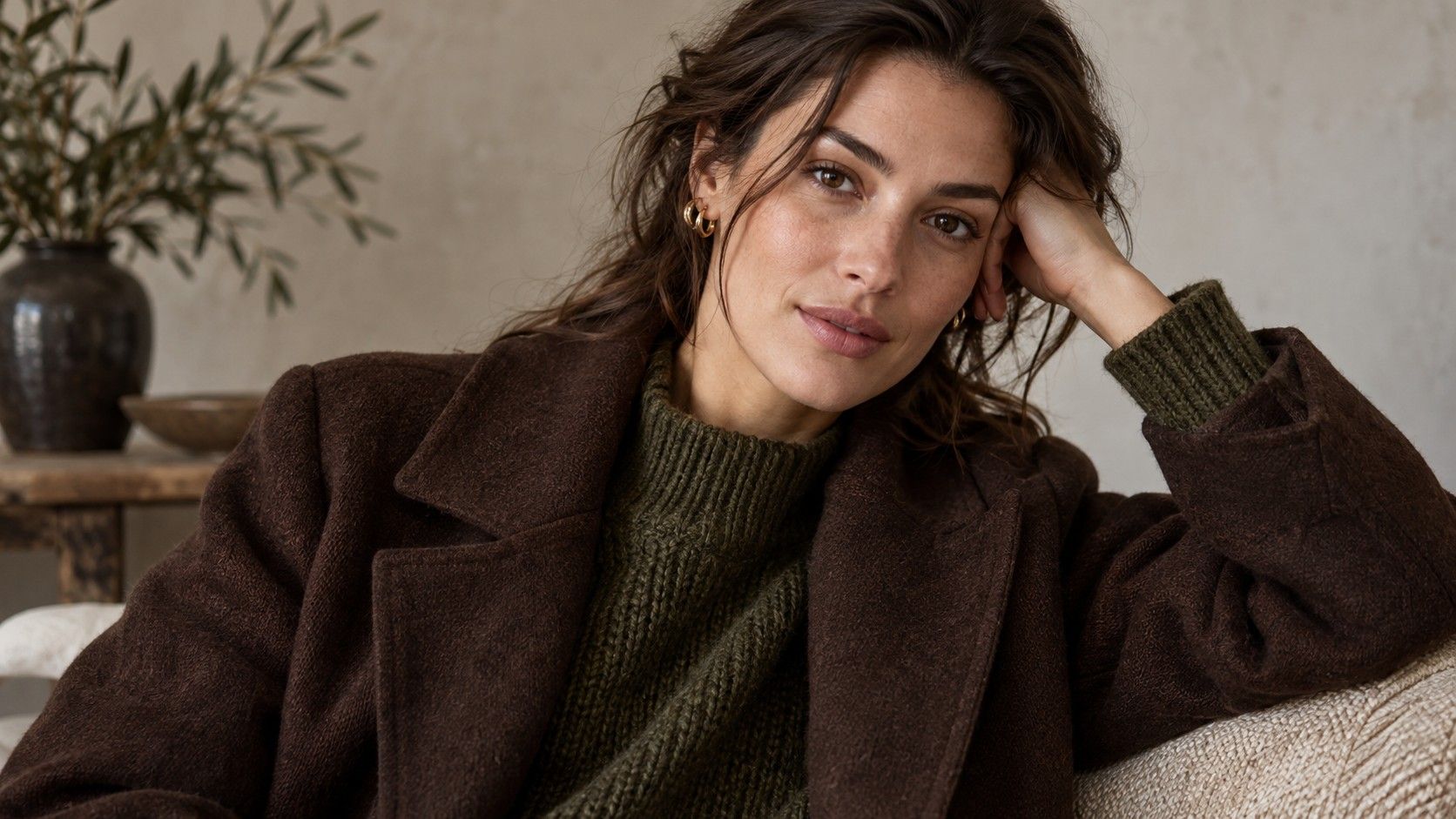
A dark brown sweater can look wonderfully clear on a hanger and rather indistinct once a coat, scarf and trousers join it. That is the useful problem to solve with Deep Autumn knitwear: choosing rich colors while keeping the shape and details of an outfit visible. Treat the deep autumn palette as a set of comparisons, then test actual yarn, daylight and layers. A color name on a product page cannot tell you how a fuzzy cardigan will behave beside your favorite jeans.
Before buying another dark sweater, separate three decisions
Deep Autumn usually describes a seasonal color direction with considerable depth and some warmth. Different systems draw its boundaries differently; some use Dark Autumn instead. A deep autumn color analysis is therefore a starting framework, not a universally fixed chart. The practical questions are whether a knit feels dark enough for your intended outfit, whether its warmth suits your preferences, and whether its color looks clear or softened in the fabric.
Depth is about lightness and darkness. Warmth concerns the relative yellow, orange or red impression of a color compared with a cooler alternative. Softness concerns how muted it appears. These characteristics can move independently: a very dark charcoal may feel cool, while a golden camel may feel warm but fairly light. Calling both colors autumnal does not make them interchangeable.
Put a dark chocolate sweater beside a lighter tobacco one, then compare chocolate with charcoal. The first pair makes depth easier to judge; the second helps you notice differences in warmth. Keep the neckline and fabric weight similar if possible. Otherwise you may be responding to a flattering cut or a softer yarn while assuming that color explains the whole preference.
Check the yarn beside a window, then step back
A smooth cotton knit, brushed wool and glossy viscose can make similar brown dyes appear quite different. Fuzzy fibers scatter the edges of a color and catch light; a smooth, dense surface often gives a more continuous impression. Ribbing adds alternating highlights and shadows. A cable sweater may look much lighter on its raised sections than in the grooves, especially under a shop spotlight.
Use indirect daylight and hold each option in the same position. Avoid a patch of direct sun that lights one shoulder and leaves the other in shade. Look close enough to see the yarn, then step back to the distance at which you normally see a full outfit. A subtle marl that looks like several colors in your hand may read as a single muted shade across a room.
Compare the sweater with two things you actually wear: perhaps dark indigo jeans and an olive coat. Fold them together on a chair, then try the combination on. Check whether the sweater and trousers blend into one dark area or remain distinct enough for your taste. If the distinction disappears, changing texture or lightness may help more than finding an even warmer brown.
A photograph can serve as a memory aid, but phone processing and changing white balance can shift the result. Include both garments in the same frame, use consistent light and compare the picture with what you see directly. For an online purchase, look for several images and a clear returns policy. A studio photograph is useful evidence about the garment, not an exact color sample.
Choose the right kind of brown, green or burgundy
Brown is a broad family. Espresso may be nearly black, chestnut may carry a visible red note, and tobacco may lean golden. If a sweater looks flat beside your usual dark trousers, test chestnut or a lighter brown before abandoning the family. A dark brown with a slightly different surface or value can retain the restrained feel while making cuffs and hems easier to distinguish.
Greens deserve the same care. Deep olive, forest and dark teal do different jobs, even when shops group them together. Compare an olive knit with the coat or jacket you intend to wear over it. Two similar olives can make an intentional tonal outfit, but if one looks yellow and the other grey, you may prefer a clearer separation, such as dark green with chocolate trousers.
Burgundy can lean wine-purple, brick-red or brown. For a warm interpretation of the deep autumn color palette, compare a brownish oxblood with a cooler wine shade in the same daylight. Choose by the relationship you enjoy with your face-framing layers and existing clothes. There is no need to establish that every burgundy belongs inside or outside an official boundary.
| If the sweater feels... | Compare it with... | Check in the outfit |
|---|---|---|
| Too close to black | Chestnut or dark olive | Whether neckline and trouser edges remain visible |
| Too golden | Chocolate or a quieter brown | How it sits beside your coat and scarf |
| Too grey or hazy | A smoother knit in a similar color | Whether texture was driving the effect |
| Too purple for your preference | Brownish burgundy or brick | Whether existing accessories connect the colors |
Use the neckline to adjust a sweater you already like
A crew neck places a broad area of yarn close to the face. A V-neck opens a space for a shirt or T-shirt, while a cardigan lets you vary how much of the inner layer shows. These are useful differences when a dark knit feels heavier than you want. Try the cardigan open before deciding that its color is the problem.
For a small amount of contrast, expose a narrow collar in cream, muted gold or a lighter brown. For stronger separation, show more of the shirt across the chest. The exact shade matters less than testing the whole arrangement: a yellow cream against one chocolate knit may feel easy, while the same collar against a reddish brown may look more conspicuous than you intended.
A scarf can change the visible color balance quickly, but also changes bulk and texture. If you are testing its color, fold it narrowly first so the volume does not overwhelm the comparison. Then arrange it as you would wear it outside. Check the result with your coat fastened; an attractive indoor arrangement may vanish under a high collar.
Build three outfits before adding a fourth sweater
Start with the knit you reach for most often. Pair it first with familiar jeans, then with a different trouser fabric, and finally with the coat or skirt you tend to overlook. Change one element at a time. Chocolate with dark indigo gives a different balance from chocolate with warm grey wool, even though both outfits may feel subdued.
For a rich tonal combination, try a dark olive sweater, brown trousers and a belt or shoes that repeat one of those colors. Keep enough difference in lightness or texture to make the silhouette readable if that is your preference. A smooth leather belt against a fuzzy knit can supply a small point of definition without introducing a bright accent.
For a more separated outfit, combine burgundy knitwear with lighter brown trousers and a darker jacket. Check where the hem falls: a thick sweater worn over a similarly dark waistband creates a different division from a tucked front edge. Shape, proportion and comfort still matter. A theoretically suitable shade will not rescue a neckline you keep pulling at.
Write down the successful combinations in ordinary terms: “olive cardigan, cream tee, straight dark jeans.” That is more useful on a shopping trip than a long list of seasonal names. When looking up color analysis Deep Autumn examples, compare their garments with this personal record rather than trying to reproduce every photographed outfit.
Let the wear test settle the final choice
Before removing tags, wear the sweater indoors with its intended layers for a few minutes. Sit down, put on the coat and check whether the collar bunches. Look at the combination in another ordinary room as well as by the window. You may love a thick cable knit in daylight and still find that it is too bulky for the jacket you use most days.
Read the care label and consider how often you will realistically wash or air the garment. Pilling, stretching and surface wear can change the impression of a knit over time, though their extent depends on the yarn, construction and use. A color choice should sit alongside those practical considerations, especially for an everyday sweater.
Deep autumn analysis is most helpful when it narrows an awkward choice, not when it makes a useful wardrobe feel wrong. Keep the black cardigan you rely on, the cooler green you enjoy or the slightly light sweater that works with your coat. The final test is specific: can you name an outfit you like, move comfortably in it and see yourself wearing it again?