A suitcase full of beige can be easy to coordinate and still leave you wishing you had packed something else. A useful Soft Autumn travel capsule needs a few differences: a darker bottom, a lighter top, an accent you enjoy, and layers that suit the trip. Seasonal color analysis can help narrow the choices, but the forecast, walking plans and laundry arrangements should decide what earns space in the bag.
Choose colors for the trip you are actually taking
Start with the days rather than the palette. Three nights in a city with restaurant reservations ask for different clothes from a week of hiking and self-catering. Note the expected temperature range, whether rain protection is needed and whether any venue has a dress code. Then identify the garments that already handle those conditions. Their colors become the starting point, even if your reliable waterproof jacket sits outside a seasonal chart.
In many seasonal systems, Soft Autumn describes a muted, warm-leaning color range. Names and boundaries vary between providers, and a digital chart cannot reproduce every real fabric. For packing purposes, think of colors such as subdued olive, warm taupe, cocoa, softened terracotta and muted peach as candidates to compare. You do not need every candidate. A small suitcase benefits from committing to a few familiar combinations.
Separate warmth from saturation and depth. A vivid orange top can be warm without being muted; a pale beige can be soft without providing much contrast against cream trousers. If your outfits feel washed into one block, you may need a darker piece rather than a different seasonal label. Use Soft Autumn color analysis to ask more precise questions about clothes, then keep the answers that work during an ordinary day of wearing them.
Set a neutral base around the trousers and shoes
Choose one or two bottoms first because they usually determine the footwear and much of the suitcase volume. Olive trousers and dark brown trousers are one possible pair; warm taupe trousers and familiar dark denim are another. Check that each fits your planned activities and works with the shoes you can comfortably wear. A theoretical capsule that depends on new, untested shoes is a poor packing bargain.
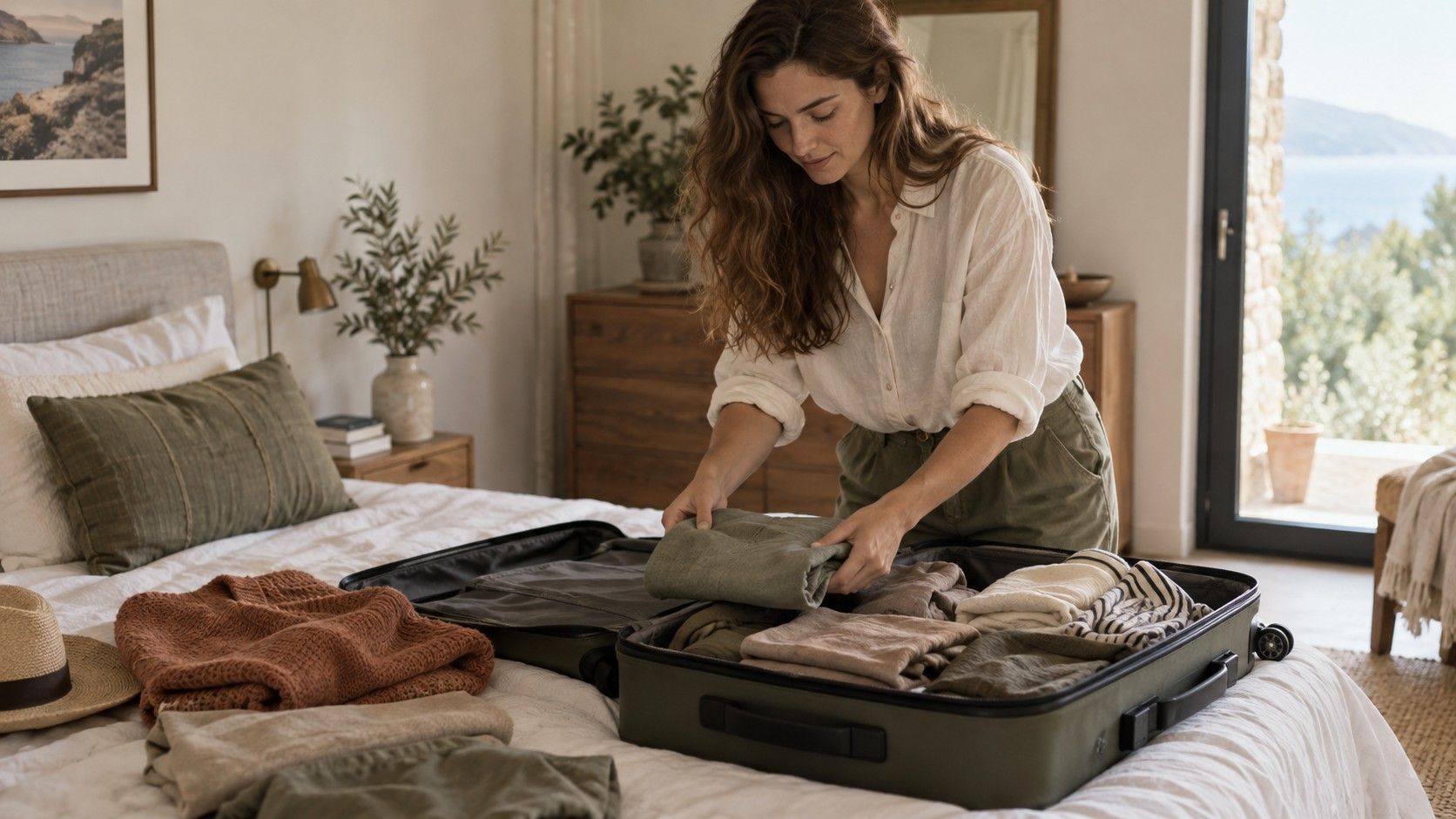
Now add two light or medium tops and one deeper top. Cream, muted peach and a soft brown-green might connect with olive trousers, for example. Lay the pieces out in actual outfits, including the outer layer. If the colors are too similar to show where one garment ends, introduce a difference in value. A cream shirt under a cocoa cardigan gives a clear light-dark relationship while keeping the overall colors restrained.
| Capsule role | Example color | Practical test |
|---|---|---|
| Main bottom | Muted olive | Works with both shoes and at least three tops |
| Second bottom | Cocoa or dark denim | Provides another option while the first is drying |
| Light top | Soft cream | Comfortable alone and under the warm layer |
| Accent top | Subdued terracotta | Pairs with both bottoms without extra accessories |
| Warm layer | Warm taupe or brown | Fits over the bulkiest packed top |
Treat these as roles, not a fixed packing list. A hot-weather trip may need more washable tops and no heavy knit; a cold-weather trip may require a proper insulated layer. Rewearing a neutral bottom is often easier than rewearing a close-fitting top, but your activities and laundry access decide the quantities. Check fabric care labels before assuming that everything can share a sink wash or a machine cycle.
Mix muted accents without turning everything beige
A Soft Autumn color palette has room for color. A dusty olive top, muted teal scarf or subdued rust shirt can give you a different outfit without requiring another pair of trousers. Choose one accent family you already enjoy wearing, then see whether it connects with both bottoms and the jacket. Adding three unrelated accent families usually creates more possible combinations on paper than useful outfits in the bag.
Contrast can come from hue, value or texture. A cream tee and dark olive trousers differ in lightness; a terracotta top and olive skirt differ in hue; a fine knit over woven trousers introduces a surface change. You can use one of these differences or several. The goal is enough definition for the outfit you want, not a mandatory contrast level based on your face or hair.
If you are weighing a Soft Summer vs Soft Autumn color palette, compare similar fabrics in neighboring colors. Try a cool dusty rose beside a warmer muted peach, keeping the jacket and trousers unchanged. Test in indirect daylight and choose which combination you prefer. Do not compare a shiny bright pink blouse with a matte beige tee and attribute the whole difference to temperature; intensity, texture and garment shape have changed too.
Patterns can connect the capsule when their main colors repeat pieces you have packed. A small cream-and-olive print might work with both brown and olive bottoms. Hold it beside the actual garments instead of relying on memory. From several steps away, inspect its overall lightness and contrast. A large cream motif may feel much bolder than a small cream dot even when the two prints use the same colors.
Give outerwear, bags and shoes a proper outfit check
Your coat or jacket may appear in almost every travel photograph and be worn more often than any accent top. Check it with the whole capsule before packing. A warm brown coat can link several muted colors; a navy rain shell may create a stronger cool contrast that you still enjoy. Weather performance and comfort are good reasons to keep a dependable layer, regardless of whether its swatch appears in the palette.
Footwear should suit the surfaces and distances you expect. Try the complete outfit with the socks you will wear, and check trouser hems over the shoes. Warm grey, brown and taupe footwear can be useful options, but a comfortable black shoe may work perfectly well with darker bottoms. There is little value in choosing a color-coordinated replacement that rubs after twenty minutes.
For a day bag, prioritize capacity, closures and carrying comfort before fine color distinctions. A bag that holds a water bottle and your necessary daily items can serve several outfits even if it is not an exact neutral match. If you pack an evening option, make sure it earns its place: can the regular bag work for the restaurant, or does the event require something different? The answer depends on the occasion rather than the seasonal label.
Pack complete outfits, then remove the stranded pieces
Before closing the case, build one outfit for each distinct situation: travel day, ordinary sightseeing, the coldest expected period and any booked occasion. Reuse pieces where practical. Photograph the combinations as a memory aid, understanding that the phone may shift their colors. A top that only works with one bottom is not automatically wrong, but it needs a clear purpose if space is tight.
Check layers physically, not just beside one another on the bed. A cardigan may fit over a tee but bunch over a shirt sleeve. A light blouse may need an underlayer, adding laundry and packing volume. Also consider pockets, the comfort of a waistband while seated, and whether the fabric creases in a way you can tolerate. These small checks are often more useful on departure day than refining the difference between two similar browns.
Plan what happens when one item becomes unavailable. If your trousers get wet, can the other bottom carry the next day's activities? If the cream top needs washing, does the accent top work under the same jacket? You do not need a duplicate of every garment. A few overlapping combinations provide flexibility while keeping the bag manageable.
After the trip, note what you wore, what stayed folded and which combinations were easiest. An unused item may reflect unexpected weather rather than a poor color choice. Keep the observations specific: olive trousers worked with every top, the extra scarf was unnecessary, the pale knit needed too much care. That is how a Soft Autumn palette becomes a practical packing habit instead of another reason to buy clothes.